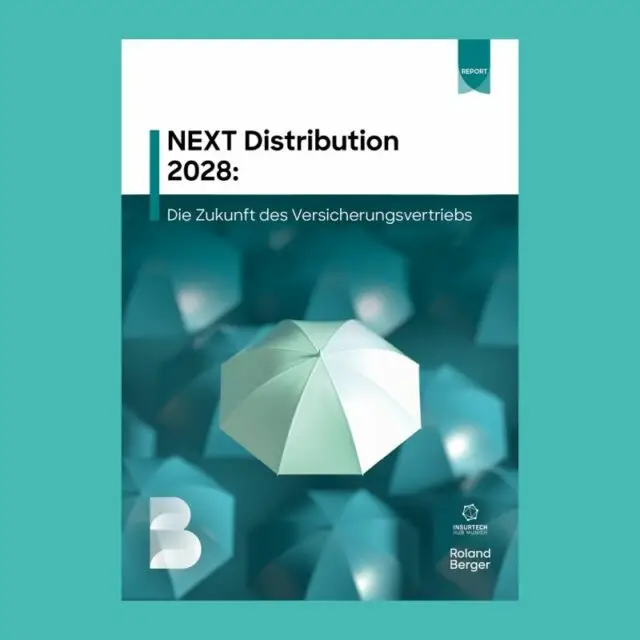
The future of insurance sales will be shaped by one key factor: technology. In 2028, self-determined customers, more demanding sales partners, new players and a wealth of technologies will shape the sales reality. This will lead to a significantly more heterogeneous sales landscape in the coming years. The strategic positioning along the sales channels will be crucial for insurers, particularly with regard to the use of artificial intelligence (AI), the focus on the different requirements of the sales channels and the staffing of the customer interface. The previous "one-size-fits-all" approach, which aimed to treat all sales channels equally, has had its day. These are the key findings of the white paper "NEXT Distribution 2028: The future of insurance distribution". It was produced in cooperation between the InsurTech Hub Munich (ITHM), an innovation platform for the insurance industry, and the global consulting firm Roland Berger.

According to the white paper, sales capacity in the insurance industry will decrease by 25 to 30 percent over the next five years due to demographic change. At the same time, it can be assumed that the size and negotiating power of sales units will continue to increase due to ongoing consolidation. In the broker channel, the number of potential partners in the SME broker segment is continuously decreasing, while the trend towards larger and more autonomous agencies is continuing in the exclusive channel. "These developments are strengthening the negotiating power of sales partners and limiting the scope for insurers," emphasizes Claudia Fell, Senior Partner at Roland Berger. At the same time, changes in various business areas, such as declining new business in the life sector, tend to lead to declining addressable commission pots for traditional distributors. Shifts in new business to other fields and sales channels are gaining in importance, such as a further increase in digital contracts or the trend from individual to collective business, which often offers little potential for the broad mass of intermediaries. According to the white paper, these developments will deprive brokers of business volumes and thus commissions. This can make sales less attractive for junior staff, who are already in short supply.
Technology is becoming a decisive competitive factor
According to the white paper, this is precisely why the use of technology towards both customers and sales channels will be fundamental to successful insurance sales in 2028. Insurers should specifically support their sales partners in making customer service even more effective. "In order to meet customer expectations in terms of personalization, transparency and accessibility despite declining sales capacities, the use of technologies such as AI and data analytics offers promising opportunities," says Esther Prax, ITHM Programs Director. In the exclusive sales organization, for example, approaches are conceivable that range from lead generation and conversion to the preparation of customer meetings with "best product recommendations" and the digital acquisition of agent portfolios.

The service provided to sales partners should be increasingly geared towards their individual requirements in order to support them and help them maximize their commission income. According to the study, brokers will in future increasingly opt for insurers that offer them technological added value - i.e. that effectively support their sales work and thus help them to maximize their commission income. Brokers and pools will also favor those insurers that offer the best technological connection and the most efficient processes and are also able to map interfaces to avatars with different functions.
Cooperation with insurtechs and technology providers
A backlog of investment in new technologies and adherence to traditional products could accelerate the demographic-related decline in intermediaries. "The extent to which a technological upgrade of the sales value chain is successful will become an additional criterion for differentiating insurers from their sales partners in the coming years," says Claudia Fell. In order to position themselves attractively, the white paper recommends that insurers increase their cooperation with specialist providers and insurtechs. According to the white paper, the trend towards sourcing components with a high level of technological expertise from third parties in order to meet sales partner and customer expectations will continue. "When deciding whether to develop something internally or source it from external partners, speed is a particularly relevant criterion. Especially when it comes to emerging technologies such as generative AI, insurtechs and technology providers can help insurers deploy them quickly and profitably," says Esther Prax.

"One-size-fits-all" approach has had its day
However, this application of technology is likely to be successful above all if insurers focus on the different requirements of the various sales channels and their respective profitability drivers. "The 'one-size-fits-all' approach no longer promises success in the future," comments Claudia Fell. On the contrary, future positioning must be geared even more closely to the needs of sales channels and customers. According to analyses by Roland Berger, insurers that specifically address the requirements of the respective sales channels are already growing significantly faster than multi-channel insurers. The average annual premium growth for multi-channel insurers in the years from 2017 to 2022 was 2.2%, while broker insurers were able to increase their premiums by 4.6% annually and AO insurers by as much as 4.8%.
Differentiated focus on the requirements of the sales channels
In order to remain successful in 2028, insurers should rethink their strategic positioning along the sales channels now and align themselves clearly - with their own agency network, with external insurance partners such as brokers with or without the involvement of aggregators, banks or financial distributors, or with third-party platforms in the form of affinity or embedded insurance solutions.

Methodology: The white paper was developed in collaboration between Roland Berger and ITHM member and partner companies and with the involvement of experts from insurance and technology companies and the insurtech sector. Based on analyses and market studies, Roland Berger formulated theses on market development and validated and sharpened these together with 20 ITHM partner companies in structured board and executive interviews.
Register now and download the report NEXT Distribution 2028: The future of insurance distribution.
*You will be redirected to monday.com.